

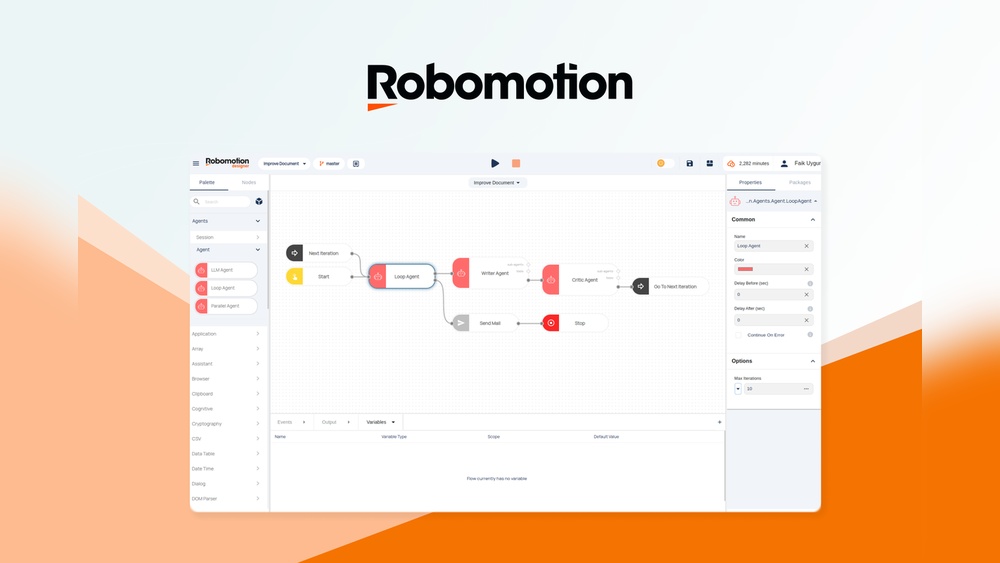
Are you tired of spending hours on repetitive, manual tasks that eat up your productivity? Choosing the right automation tool can transform how you work, saving you time and reducing errors.
But with so many options out there, how do you decide between Robomotion RPA and Microsoft Power Automate? This Robomotion RPA vs Power Automate review breaks down the key differences and strengths of each platform. Whether you’re a small business owner or part of a large team, you’ll discover which tool fits your needs and budget best. Ready to take control of your workflow and boost your efficiency? Let’s dive in and find out which automation solution works for you. If you want to explore Robomotion RPA right away, check it out here: Robomotion RPA on AppSumo.
Introduction To Robomotion Rpa And Power Automate
Automation tools simplify repetitive tasks and improve efficiency. Robomotion RPA and Power Automate are popular choices in this space. Both help businesses save time by automating manual work. Understanding their features clarifies which fits specific needs best.
Overview Of Robomotion Rpa: Purpose And Core Capabilities
Robomotion RPA focuses on automating repetitive and data-heavy manual tasks. It uses software bots to handle complex workflows that span multiple systems. Key capabilities include:
- Automating data entry and extraction
- Integrating with various applications and websites
- Managing end-to-end business processes
- Supporting rule-based automation for accuracy
This tool suits businesses needing broad automation across diverse platforms. It reduces errors and frees up staff for higher-value work.
Introduction To Power Automate And Its Role In Task Automation
Power Automate is a task automation tool from Microsoft. It helps automate workflows mainly within the Microsoft ecosystem. Its purpose is to simplify individual task automation like:
- Moving files between OneDrive and SharePoint
- Sending notifications or emails automatically
- Connecting Microsoft apps with third-party services
Power Automate is user-friendly for non-developers. It enables quick automation without deep technical knowledge.
Understanding The Differences Between Robomotion Rpa And Power Automate
| Feature | Robomotion RPA | Power Automate |
|---|---|---|
| Automation Scope | Complex, multi-system business processes | Task and workflow automation within Microsoft apps |
| Integration | Works with diverse platforms and web apps | Strong integration with Microsoft 365 and Azure |
| User Level | Designed for technical users and developers | Accessible to business users and beginners |
| Use Cases | Data-intensive automation, cross-application tasks | Automating notifications, approvals, data sync |
| Complexity | Handles more advanced automation scenarios | Focused on simpler, individual task automation |
Robomotion RPA suits enterprises needing broad automation. Power Automate fits teams using Microsoft tools for simpler workflows.

Credit: appsumo.com
Key Features That Differentiate Robomotion Rpa
Robomotion RPA stands out due to its unique features designed for efficient automation. It supports complex workflows and handles multiple tasks at once. The platform is built to work beyond just one software ecosystem, offering great flexibility.
High Concurrency And Performance: Running Multiple Automations Simultaneously
Robomotion RPA excels in managing high concurrency. It allows users to run several automation processes at the same time without slowing down.
- Processes multiple tasks in parallel
- Improves overall efficiency
- Reduces waiting time for task completion
This capability suits businesses with heavy automation needs. It ensures smooth operation even under a large workload.
Low-code Platform For Building Complex Automations
Robomotion uses a low-code interface, making it easy for users to create advanced automations.
- Drag-and-drop design tools
- Minimal coding required
- Speeds up automation development
Users can build detailed workflows without deep programming skills. This helps teams deploy automations faster and maintain them easily.
Cross-system Automation Beyond Microsoft Ecosystem
Unlike some tools focused on one software family, Robomotion RPA supports automation across various systems.
| Feature | Robomotion RPA | Power Automate |
|---|---|---|
| Microsoft Ecosystem Integration | Supported | Primary focus |
| Other Software Systems | Fully supported | Limited support |
| Cross-Platform Automation | Yes | Partial |
This feature allows businesses to automate tasks that involve multiple software platforms. It increases the scope and power of automation beyond typical limits.
Key Features That Make Power Automate Stand Out
Power Automate offers a focused approach to automating tasks and workflows, especially for users embedded in the Microsoft ecosystem. Its design targets individual task automation with simplicity and efficiency. The platform’s features cater to both beginners and advanced users, making it a versatile tool for boosting productivity.
Seamless Integration Within Microsoft Ecosystem
Power Automate connects smoothly with a wide range of Microsoft products like Office 365, SharePoint, Teams, and OneDrive. This tight integration allows users to automate workflows across these apps without complex setups.
- Native connectors for Microsoft services
- Automated triggers based on Microsoft app events
- Data syncing between Microsoft apps in real-time
Such integration reduces the need for third-party tools, streamlining automation in familiar environments.
User-friendly Interface For Automating Individual Tasks And Workflows
The platform provides a drag-and-drop visual designer that simplifies workflow creation. Users can build automation without coding knowledge.
- Pre-built templates for common tasks
- Step-by-step flow creation guides
- Easy customization of triggers and actions
This interface enables quick setup of automated processes like sending emails, collecting data, or updating records.
Quality Of Support And Community Resources
Power Automate benefits from Microsoft’s extensive support network and active user community. Help is accessible through multiple channels.
| Support Type | Description |
|---|---|
| Official Documentation | Detailed guides and troubleshooting articles |
| Community Forums | User discussions, tips, and shared solutions |
| Training Resources | Video tutorials and certification programs |
These resources help users resolve issues quickly and learn automation best practices.

Credit: www.g2.com
Pricing And Affordability Analysis
Understanding the pricing models of Robomotion RPA and Power Automate helps businesses choose the right automation tool. Both platforms offer different plans and costs that cater to diverse needs. This section breaks down their pricing structures, value propositions, and compares affordability and return on investment (ROI).
Robomotion Rpa Pricing Structure And Value Proposition
Robomotion RPA offers a straightforward pricing model designed for small to medium businesses.
- Flat monthly fee with unlimited bots in some plans.
- Focus on automating repetitive and data-heavy manual tasks.
- Includes access to core features without extra charges.
- Ideal for teams looking for cost-effective automation without hidden fees.
This pricing approach allows businesses to predict costs easily. Robomotion emphasizes value for money by combining essential automation tools into one package.
Power Automate Pricing Plans And Cost Efficiency
Power Automate’s pricing is more segmented and tied to Microsoft’s ecosystem.
| Plan | Price (Per User/Month) | Key Features |
|---|---|---|
| Per User Plan | $15 | Unlimited flows per user |
| Per Flow Plan | $500 (per flow/month) | Five flows for unlimited users |
Power Automate integrates deeply with Microsoft products. This benefits companies already invested in Microsoft 365. However, pricing can increase with added flows or users.
Comparative Affordability And Roi Considerations
Robomotion RPA suits businesses seeking predictable costs and simple setups.
Power Automate fits organizations needing scalable automation within Microsoft tools.
| Aspect | Robomotion RPA | Power Automate |
|---|---|---|
| Pricing Model | Flat fee, unlimited bots | Per user or per flow |
| Best For | Small to mid-sized businesses | Enterprises with Microsoft ecosystem |
| Cost Predictability | High | Variable with users/flows |
| ROI Potential | Fast setup, quick task automation | Long-term process automation |
Businesses should weigh upfront costs against automation benefits. Robomotion offers quicker ROI for simple tasks. Power Automate delivers value in complex workflows and integrations.
Pros And Cons Based On Real-world Usage
Understanding the strengths and weaknesses of Robomotion RPA and Power Automate helps users choose the right tool. Real-world usage reveals how each platform performs under different conditions. This section highlights practical advantages, limitations, and common challenges faced by users.
Advantages And Limitations Of Robomotion Rpa In Practical Scenarios
Robomotion RPA excels at automating repetitive and data-heavy tasks across multiple systems. Users appreciate its ability to handle complex workflows beyond simple task automation.
- Advantages:
- Supports broad automation across various platforms and UIs
- Good for complex business process automation
- User-friendly interface that reduces the learning curve
- Flexible integration options with third-party tools
- Limitations:
- May require technical knowledge for advanced workflows
- Occasional performance lags with very large data sets
- Limited community support compared to bigger platforms
Strengths And Weaknesses Of Power Automate From User Feedback
Power Automate focuses on task-level automation, mainly within the Microsoft ecosystem. It suits users who need quick workflow automation integrated with Microsoft products.
| Strengths | Weaknesses |
|---|---|
|
|
Common Challenges Faced And How Each Tool Addresses Them
Automation tools face hurdles like handling complex data, system integration, and user skill gaps.
- Complex Workflow Management:
- Robomotion handles multi-step workflows well but needs technical skills.
- Power Automate simplifies task workflows but struggles with complexity.
- Integration Across Platforms:
- Robomotion offers broad third-party integrations for diverse systems.
- Power Automate excels within Microsoft products but limits outside integration.
- User Accessibility:
- Robomotion requires some training for advanced use cases.
- Power Automate is more accessible for beginners and non-technical users.
- Performance and Scalability:
- Robomotion may slow with huge data but handles scale better overall.
- Power Automate performs well for small to medium workflows but may lag at scale.
Both tools address challenges differently, fitting distinct user needs and environments.
Credit: appsumo.com
Ideal Use Cases And Recommendations
Choosing the right automation tool depends on specific business needs and project goals. Both Robomotion RPA and Power Automate offer unique strengths suited to different scenarios. Understanding where each excels helps maximize productivity and reduce manual work efficiently.
Which Businesses And Projects Benefit Most From Robomotion Rpa
Robomotion RPA fits best for businesses with complex, repetitive, and data-heavy tasks. It automates entire workflows involving multiple systems and user interfaces. Ideal for companies that require:
- Automation of end-to-end business processes
- Handling large volumes of structured and unstructured data
- Integration across diverse software platforms beyond Microsoft
- Tasks requiring advanced rule-based logic and decision-making
Typical projects include invoice processing, customer service automation, and data migration tasks in finance, healthcare, and logistics sectors.
Ideal Scenarios For Leveraging Power Automate Effectively
Power Automate is best suited for automating individual tasks or workflows within the Microsoft ecosystem. It works well for:
- Streamlining workflows inside Microsoft 365 apps like Outlook, SharePoint, and Teams
- Automating simple repetitive tasks such as email alerts, approvals, and data collection
- Users who prefer low-code/no-code solutions with quick deployment
- Small to medium businesses or teams focused on Microsoft tools
Power Automate shines in scenarios where automation stays within familiar Microsoft environments, improving daily productivity without complex setup.
Guidance On Choosing Between Robomotion Rpa And Power Automate Based On Needs
| Factor | Robomotion RPA | Power Automate |
|---|---|---|
| Complexity of Automation | High – handles multi-system workflows | Low to Medium – best for task-level automation |
| Integration | Multiple platforms beyond Microsoft | Deep integration with Microsoft 365 |
| User Skill Level | Requires some technical knowledge | Designed for non-technical users |
| Business Size | Mid to large enterprises with complex needs | Small to medium businesses or departments |
| Cost Consideration | Potentially higher due to advanced features | Cost-effective for Microsoft users |
- Choose Robomotion RPA for large-scale, complex automations across systems.
- Choose Power Automate for simpler workflows within Microsoft products.
- Consider user skill and budget constraints before deciding.
Matching automation tools to project needs ensures smoother implementation and better returns.
Future Outlook And Evolution Of Rpa With Robomotion And Power Automate
The future of Robotic Process Automation (RPA) is shaped by rapid innovation and evolving business needs. Robomotion and Power Automate are key players adapting to these shifts. Both platforms focus on improving efficiency by automating repetitive, data-heavy tasks. Their evolution reflects a move towards smarter, more integrated automation solutions.
As automation becomes central to digital transformation, these tools will expand capabilities. The integration of advanced technologies like AI will enhance their power. Businesses can expect more flexible, scalable, and intelligent automation in the near future.
How Robomotion Rpa Is Adapting To Next-generation Automation Trends
Robomotion RPA is evolving to meet modern automation demands by focusing on:
- Ease of use: Simplified interfaces allow users with minimal coding skills to build workflows.
- Scalability: Supports growing automation needs from small tasks to complex processes.
- Cross-platform compatibility: Works across various systems and applications beyond Microsoft products.
- Data-intensive task automation: Specializes in handling large volumes of data efficiently.
Robomotion also invests in community-driven updates and user feedback to stay current. Its adaptability positions it well for future automation trends.
Power Automate’s Role In The Changing Landscape Of Process Automation
Power Automate focuses on automating tasks within the Microsoft ecosystem. It serves as a bridge for businesses deeply invested in Microsoft tools. Key aspects include:
- Task and workflow automation: Streamlines individual repetitive tasks effectively.
- Integration with Microsoft 365: Enables smooth automation across popular apps like Outlook, Teams, and SharePoint.
- Low-code development: Allows users to create automation with minimal coding.
- Continuous updates: Regularly refreshed to support new Microsoft features and services.
Power Automate adapts to the shifting automation landscape by enhancing cloud capabilities and expanding connectors.
Integrating Ai And Advanced Technologies In Both Platforms
Both Robomotion and Power Automate increasingly integrate Artificial Intelligence (AI) and advanced technologies to boost automation intelligence.
| Feature | Robomotion RPA | Power Automate |
|---|---|---|
| AI Integration | Uses AI to enhance data processing and decision-making. | Leverages Microsoft AI Builder for predictive analytics and form processing. |
| Machine Learning | Supports ML models to improve automation accuracy over time. | Integrates ML through Azure services for smarter workflows. |
| Natural Language Processing (NLP) | Incorporates NLP for better understanding of user inputs. | Uses AI to interpret and automate tasks from natural language commands. |
| Advanced Analytics | Provides insights to optimize automation performance. | Offers analytics dashboards via Power Platform for monitoring. |
These advancements help both platforms automate complex tasks and improve user experience. AI-driven automation is a key trend shaping their evolution.
Conclusion: The Ultimate Automation Showdown
The battle between Robomotion RPA and Power Automate highlights key differences in automation focus and capabilities. Both tools serve to reduce manual work but target distinct automation needs. Understanding their strengths helps users select the best fit for their tasks and business goals.
Summary Of Key Differences And Strengths
| Feature | Robomotion RPA | Power Automate |
|---|---|---|
| Automation Scope | Automates complex, multi-system business processes | Focuses on automating individual tasks and workflows |
| Integration | Works across various platforms and UIs | Strongly integrated within Microsoft ecosystem |
| User Base | Suitable for broader enterprise automation needs | Ideal for Microsoft users and task-level automation |
| Complexity | Handles data-intensive, repetitive manual tasks | Best for simpler, workflow-based automation |
| Scalability | Designed for scalable business process transformation | Good for quick automation wins within Microsoft tools |
Final Thoughts On Choosing The Right Automation Tool
Choosing between Robomotion RPA and Power Automate depends on task complexity and environment.
Robomotion RPA fits companies needing deep automation across multiple systems. It suits those who want to reduce time on data-heavy, manual processes.
Power Automate appeals to users embedded in Microsoft products. It works well for automating specific workflows or tasks inside that ecosystem.
Consider your current tools, team skills, and automation goals before deciding.
Encouraging Informed Decisions For Maximizing Automation Benefits
- Assess which tasks consume most manual effort.
- Match tool capabilities with your automation needs.
- Evaluate integration options with existing systems.
- Start with small projects to test the tool’s fit.
- Plan for scalability and future automation growth.
Informed choices lead to better automation results and efficiency gains.
Frequently Asked Questions
What Is The Difference Between Power Automate And Rpa?
Power Automate automates individual Microsoft workflows. RPA automates complex, multi-system business processes across various platforms.
Which Rpa Tool Is In Most Demand?
UiPath leads in demand due to its user-friendly interface, scalability, and strong AI integration. Enterprises prefer it for complex task automation and business transformation.
Is The Power Automate Outdated?
Power Automate is not outdated. Microsoft regularly updates it with new features and improvements for modern automation needs.
Is Rpa Outdated?
RPA is not outdated; it evolves by integrating AI and advanced automation technologies. It remains vital for business efficiency and digital transformation.
Conclusion
Both Robomotion RPA and Power Automate help automate repetitive tasks effectively. Robomotion offers broader automation across systems, while Power Automate works well inside Microsoft tools. Your choice depends on your needs and budget. For easy, flexible automation, consider trying Robomotion RPA. Explore its features and benefits here: Robomotion RPA. Automating tasks saves time and reduces errors. Start small, grow your automation step-by-step, and improve your workflow today.
