


Trying to decide between FuseBase and Asana for managing your projects and teamwork? You want a tool that not only keeps your tasks organized but also streamlines client collaboration and cuts down on busywork.
FuseBase offers AI-powered workspaces with 24/7 agents designed to automate your workflows securely, so you spend less time juggling apps and more time getting things done. But how does it stack up against Asana, a well-known name in project management? If you’re curious about which platform suits your style best and can boost your productivity, keep reading. Ready to explore a smarter way to manage your work? Check out FuseBase here: FuseBase on AppSumo.
Introduction To Fusebase And Asana
Managing projects and teamwork requires the right tools. FuseBase and Asana are popular choices. Both help teams organize tasks and communicate better. Understanding their features helps pick the best fit for any team.
Overview Of Fusebase: Purpose And Core Functions
FuseBase is built to automate teamwork and client collaboration. It uses AI-powered workspaces to reduce busywork. Teams get 24/7 agent support to keep projects moving smoothly.
- Centralizes documents and communication in one place
- Offers customizable workflows and automation
- Focuses on secure, AI-driven task management
- Designed to eliminate the need for multiple apps
FuseBase helps teams work faster by automating repetitive tasks and improving client interactions.
Introduction To Asana: Key Objectives And User Base
Asana is a well-known project management tool. It focuses on task tracking, team collaboration, and project planning. Asana serves a wide range of users, from small businesses to large enterprises.
- Visual task boards and timelines
- Easy task assignment and progress tracking
- Integrates with many third-party apps
- Supports both simple to complex project workflows
Asana helps teams stay organized and meet deadlines through clear task management.
Why Compare Fusebase And Asana? Understanding The Need For Project Management Alternatives
Teams need tools that match their unique workflows. Not all project managers fit every team. Comparing FuseBase and Asana highlights differences in automation, document handling, and customization.
Key reasons to explore alternatives:
- Workflow customization: FuseBase offers deep customization, ideal for specific client needs.
- Automation capabilities: FuseBase uses AI to automate tasks, reducing manual work.
- Integrated document management: FuseBase combines project and document management, limiting app switching.
- Established user base: Asana has broad adoption and many integrations.
Understanding these points helps teams choose a tool that improves productivity and suits their style.
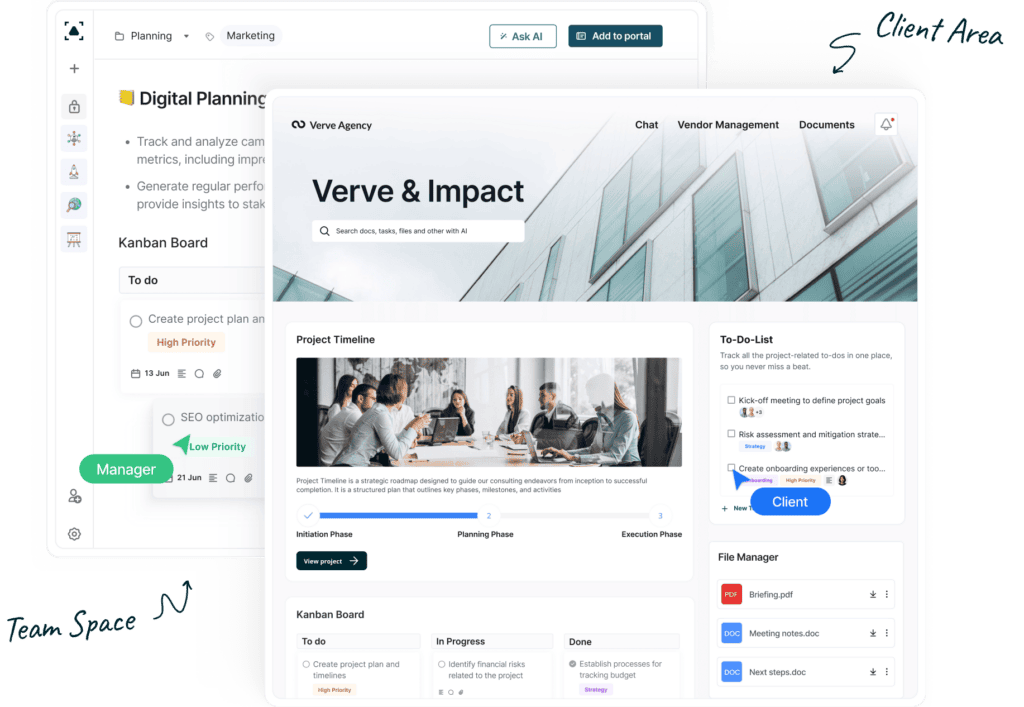
Credit: thefusebase.com
Unique Features Of Fusebase
FuseBase stands out with its powerful tools designed to simplify teamwork and client collaboration. It combines multiple functions into one platform. This reduces the need to switch between apps. Teams enjoy smoother workflows and better communication. Below are some key features that make FuseBase unique.
Advanced Client Interaction Management: Enhancing Communication And Collaboration
FuseBase offers a centralized hub for managing all client interactions. It keeps conversations, tasks, and updates in one place. This feature helps teams respond faster and stay organized.
- Real-time messaging and notifications
- Track client requests and feedback easily
- Collaboration tools built into the workspace
- Improves transparency between team and clients
These tools reduce communication delays and avoid missed messages. Teams can focus on delivering quality work.
Integrated Document Management: Eliminating The Need For Multiple Apps
FuseBase includes built-in document management. It lets teams create, store, and share files without extra software. Users no longer need to switch between apps like Google Drive or Dropbox.
| Feature | Benefit |
|---|---|
| Single storage location | Easy access to all project files |
| Version control | Keep track of document changes |
| Secure sharing | Control who can view or edit files |
This integration streamlines project management. Teams avoid confusion and lost files.
Customization And Functionality: Tailoring Workflows To Your Team’s Needs
FuseBase offers extensive customization. Teams can tailor workflows to fit their unique processes. This flexibility helps improve productivity and task tracking.
- Create custom task statuses and categories
- Automate repetitive tasks with AI-powered agents
- Set personalized notifications and reminders
- Design dashboards that highlight key metrics
These options let teams work the way they prefer. FuseBase adapts to different industries and team sizes.
Distinctive Features Of Asana
Asana stands out as a powerful project management tool designed to simplify teamwork and boost productivity. It offers features that help teams organize tasks, automate workflows, and communicate effortlessly. These features create an environment where teams stay focused and projects move forward smoothly.
Each function in Asana targets key challenges in project management. The platform’s design supports clear task assignments, easy collaboration, and real-time updates. This keeps everyone aligned and aware of project progress.
Task And Workflow Automation: Streamlining Project Execution
Asana allows users to create automated rules that reduce manual work. These rules trigger actions based on task changes, making workflows faster and less error-prone.
- Automatically assign tasks to team members
- Move tasks between sections when status changes
- Set due dates based on task priorities
- Send reminders and notifications
This automation helps teams focus on important work instead of repetitive updates. It ensures tasks progress without delays.
Cross-department Collaboration Tools: Enabling Seamless Team Coordination
Asana supports collaboration across different teams and departments through shared projects and communication features.
- Comment directly on tasks to provide feedback
- Tag team members to request input or updates
- Share project timelines for transparency
- Integrate with communication apps like Slack and Microsoft Teams
These tools break down silos and keep all team members informed. They foster a culture of openness and quick problem solving.
Real-time Progress Tracking And Reporting: Keeping Projects On Schedule
Asana offers real-time dashboards and reporting to monitor project status easily.
| Feature | Benefit |
|---|---|
| Timeline View | Visualize project phases and deadlines clearly |
| Progress Charts | Track task completion rates and identify bottlenecks |
| Custom Reports | Generate insights tailored to team needs |
| Notifications | Receive alerts about delays or task updates |
These features help managers and teams spot issues early. They maintain steady progress and meet deadlines reliably.

Credit: www.youtube.com
Pricing And Affordability Breakdown
Choosing the right project management tool depends heavily on pricing and affordability. Both FuseBase and Asana offer distinct pricing structures designed for various team needs. Understanding their pricing models helps identify which platform fits your budget and growth plans. Here is a clear breakdown of each platform’s costs and value.
Fusebase Pricing Models: Value For Money And Scalability
FuseBase offers pricing that scales with your team size and needs. Its plans focus on automating teamwork, client collaboration, and busywork using AI-powered workspaces.
- Starter Plan: Ideal for small teams wanting basic automation and collaboration tools.
- Professional Plan: Adds advanced AI agents and enhanced document management.
- Enterprise Plan: Custom pricing for large organizations needing full workspace customization and 24/7 support.
The pricing is competitive given the deep automation features and integration of document management within one platform. Scalability is smooth, allowing teams to upgrade as their workflows grow.
Asana Pricing Plans: Options For Different Team Sizes And Requirements
Asana provides several pricing tiers catering to diverse team sizes and project complexities.
| Plan | Key Features | Price (per user/month) |
|---|---|---|
| Basic | Task management, unlimited projects, basic dashboards | Free |
| Premium | Timeline view, advanced search, custom fields | $10.99 |
| Business | Portfolios, workload, advanced integrations | $24.99 |
| Enterprise | Custom security, advanced admin controls, priority support | Custom pricing |
These plans allow teams to pick options that match their size and project needs. Asana’s free tier supports basic use, while paid tiers unlock powerful tools for larger teams.
Comparative Analysis: Which Platform Offers Better Roi?
Choosing between FuseBase and Asana depends on your priorities:
- Cost Efficiency: FuseBase may offer more value for teams wanting built-in AI automation and document handling in one platform.
- Flexibility: Asana provides flexible pricing with a free option and multiple tiers, ideal for varying team sizes.
- Scalability: FuseBase’s plans scale well with growing automation needs, while Asana scales by adding features for project complexity.
- Support and Features: Both offer enterprise plans with custom pricing and enhanced support.
FuseBase suits teams needing automation and client collaboration without juggling multiple apps. Asana works well for diverse teams requiring versatile project tracking across industries.
Evaluate your team size, budget, and feature needs to find the platform with the best return on investment.
Pros And Cons Based On Real-world Usage
Choosing between FuseBase and Asana depends on how each tool fits real work needs. Users share clear views on strengths and drawbacks. These insights help teams pick the right platform for their projects.
Fusebase Advantages And Limitations: User Feedback And Practical Insights
FuseBase wins praise for its all-in-one workspace that merges teamwork, client collaboration, and document management. Users appreciate not switching between apps, which saves time.
- Advantages:
- AI-powered automation reduces busywork.
- Centralized client interaction hub.
- Strong document handling inside the platform.
- 24/7 AI agents available for support.
- Customizable workflows fit varied team needs.
- Limitations:
- Smaller user base means fewer community resources.
- Learning curve for teams new to AI tools.
- Less integration with third-party apps compared to Asana.
- Occasional lag reported during high-volume projects.
Asana Strengths And Weaknesses: Lessons From Diverse Industry Users
Asana remains popular across industries for clear task management and team coordination. Users value its proven reliability and rich integrations.
- Strengths:
- Intuitive task tracking and project visualization.
- Wide range of app integrations (Slack, Google Drive, etc.).
- Strong mobile app support for remote teams.
- Robust reporting and timeline features.
- Large user community with extensive tutorials.
- Weaknesses:
- Requires multiple tools for full document management.
- Can get costly for larger teams with premium plans.
- Some users find customization options limited.
- Automation features less advanced than FuseBase’s AI agents.
Comparative User Experience: Which Tool Excels In Different Scenarios?
| Scenario | FuseBase | Asana |
|---|---|---|
| Teams needing AI automation | Excels with 24/7 AI agents and workflow automation | Limited AI support, manual setup needed |
| Document-heavy projects | Strong integrated document management | Needs external apps for document handling |
| Large teams with diverse apps | Less integrations, may require workarounds | Best for wide integrations and scalability |
| Simple task tracking and timelines | Good but less visual clarity | Exceptional with clear visuals and timelines |
| Budget-conscious users | Competitive pricing with AI features included | Costs rise with premium features and team size |
FuseBase suits teams aiming for integrated AI and document work. Asana fits those needing broad app connections and visual task flows.
Ideal Users And Use Case Recommendations
Choosing the right project management tool shapes team success. Both FuseBase and Asana serve different needs and project types. Understanding who benefits most from each tool helps match your team to the right platform.
Who Should Choose Fusebase? Best Fit Based On Business Needs And Project Types
FuseBase excels in automating teamwork and client collaboration within secure, AI-powered workspaces. It suits businesses that:
- Need centralized document management without switching apps
- Handle client interactions frequently
- Want to reduce busywork via automation
- Require 24/7 AI agents to assist workflow
This tool fits small to medium teams focused on improving collaboration and streamlining paperwork.
Project types best matched with FuseBase include:
- Client-driven projects needing constant updates
- Tasks involving extensive document workflows
- Teams requiring higher customization for internal processes
Ideal Scenarios For Asana: Teams And Projects That Benefit Most
Asana is a versatile platform designed for broad project and task management. It suits teams that:
- Manage complex projects with many moving parts
- Value task assignment and progress tracking
- Work in large teams across departments
- Need integrations with many external tools
It is ideal for projects such as:
- Marketing campaigns with multiple contributors
- Product development and launch timelines
- Cross-functional collaboration efforts
Guidance On Selecting The Right Tool For Your Project Success
Compare your team’s priorities with each tool’s strengths:
| Criteria | FuseBase | Asana |
|---|---|---|
| Automation & AI Support | Strong – AI agents automate tasks and busywork | Limited automation features |
| Document Management | Integrated centralized hub | Requires external apps |
| Team Size | Small to medium teams | Small to large teams |
| Project Complexity | Client-focused and document-heavy projects | Complex projects with many tasks |
| Customization | High | Moderate |
Choose FuseBase if automation and centralized client collaboration are top priorities.
Pick Asana for handling complex projects and diverse team workflows.
Assess your workflow type and team size carefully. This ensures the project tool fits your needs well.
Conclusion: Making The Right Choice For Your Project Management
Choosing the best project management tool shapes your team’s success and daily workflow. FuseBase and Asana both offer powerful features but serve different needs. Understanding their core differences helps pick the platform that fits your project style and goals.
Summary Of Key Differences And Benefits
| Feature | FuseBase | Asana |
|---|---|---|
| Core Focus | Automates teamwork and client collaboration with AI-powered workspaces | Streamlines task and project tracking for teams of all sizes |
| Document Management | Built-in, centralized hub for documents and client interactions | Requires integration with external document apps |
| Customization | Offers more customization and functionality for workflows | Provides templates and moderate customization options |
| User Interface | Intuitive AI-powered workspace designed for automation | Clean, user-friendly interface with focus on task lists and timelines |
| Collaboration | Strong focus on client collaboration and reducing busywork | Robust team communication and task assignment features |
Final Recommendations Based On User Priorities And Goals
Choose FuseBase if your project demands:
- Automated workflows to reduce manual tasks
- Integrated document management without app switching
- Strong client collaboration features
- AI-powered workspace to boost efficiency
Choose Asana if your project requires:
- Flexible task and project tracking for diverse teams
- Simple interface focused on clear timelines and task lists
- Wide adoption and extensive integration options
- Easy onboarding for users new to project management tools
Next Steps: How To Trial And Implement Your Chosen Platform
- Sign up for a free trial. Both FuseBase and Asana offer trial periods. Use them to explore key features.
- Set up a pilot project. Create a real project with your team to test workflows and collaboration.
- Gather team feedback. Ask your team about ease of use and feature usefulness.
- Customize your workspace. Tailor settings and automations to fit your project needs.
- Plan the full rollout. Train your team and gradually switch to the new platform.
- Monitor adoption and results. Track productivity improvements and address any issues.
Trial and testing help confirm the best tool for your unique project needs. Start small and build confidence before full implementation.

Credit: thefusebase.com
Frequently Asked Questions
What Is The Best Alternative To Asana?
FuseBase is the best alternative to Asana, offering advanced client interaction management and seamless document handling. It boosts productivity and customization.
Who Does Asana Compete With?
Asana competes with project management tools like Trello, Monday. com, Jira, ClickUp, and Microsoft Teams. These platforms offer task tracking and collaboration features.
Is Airtable Better Than Asana?
Airtable excels in flexible database management and customization. Asana focuses on task tracking and team collaboration. Choose Airtable for complex workflows, Asana for straightforward project management.
What Is The Microsoft Team Equivalent Of Asana?
The Microsoft Teams equivalent of Asana is Microsoft Planner. It offers task management and team collaboration within Teams.
Conclusion
Choosing between FuseBase and Asana depends on your team’s needs. FuseBase offers strong document management and AI-powered automation. Asana provides a familiar, easy project tracking experience. FuseBase helps keep client collaboration and paperwork in one place. Asana shines in straightforward task and project management. Both tools improve teamwork but in different ways. Explore FuseBase for a centralized, customizable workspace. Discover more about FuseBase here and decide what fits your workflow best.
